
Hair Transplant in Iran for International Patients | Ariyan
1405/07/01
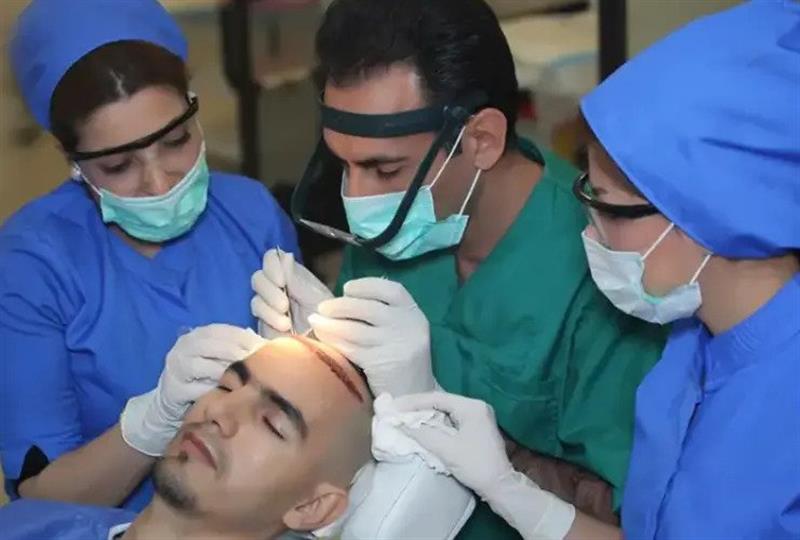
If you are considering travelling to Iran for a hair transplant, the first questions are not simply about price or the number of grafts. You first need to know whether hair transplantation is suitable for your type of hair loss, whether your donor area can support the proposed treatment, what result is realistically achievable, and how follow-up will work after you return home.
Ariyan Clinic is located in Shiraz, Iran. For international patients, an initial remote consultation can help clarify which information and examinations may be needed before travelling. However, photographs alone should not be treated as a final diagnosis, final graft estimate or guarantee of a particular result.
Are You a Suitable Candidate for a Hair Transplant?
Hair transplantation redistributes existing hair follicles from a donor area to areas affected by thinning or hair loss. It does not create an unlimited new supply of hair.
According to the American Academy of Dermatology, candidacy depends in part on having enough healthy donor hair and the ability to grow hair in the recipient area. Determining the cause of hair loss can also require medical examination and, in some cases, additional testing.
Read the American Academy of Dermatology guidance on hair transplantation
Previous hair transplants, ongoing hair loss, scalp conditions, medical history and current medications can all be relevant to treatment planning. These factors should be reviewed before making travel or treatment arrangements.
Understanding FUE Hair Transplantation
FUE stands for Follicular Unit Extraction. In this technique, follicular units are removed individually from the donor area rather than through removal of a strip of scalp.
One important distinction is scarring. FUE avoids the long linear donor scar associated with FUT, but it should not be described as scarless. Small extraction scars remain possible.
The International Society of Hair Restoration Surgery specifically warns against terms such as “scarless surgery,” “pain free,” “no risk,” “unlimited grafts” and “guaranteed results” in hair-transplant marketing.
Read the ISHRS explanation of FUE scarring
The final choice of technique, donor strategy, graft requirement and hairline design should be based on the individual case rather than a standard package.
Why Donor Area Planning Matters
The donor area is limited. More grafts are not automatically better.
Planning should consider the size of the recipient area, donor density, previous procedures, existing hair characteristics and the possibility of future hair loss.
This is particularly important for younger patients or anyone whose non-transplanted hair may continue to thin. The transplant should be planned with the longer-term appearance in mind rather than focusing only on immediate density.
Initial Assessment Before Travelling to Shiraz
International patients should complete as much preliminary assessment as reasonably possible before booking a medical trip.
Clear photographs of the front, top, sides and donor area can be useful for an initial review. Relevant information about hair-loss history, previous procedures, medical conditions and medications may also be required.
A remote assessment can help determine the next step, but the final treatment plan may change after an in-person examination.
Before making travel arrangements, ask for clear information about:
-
whether you appear to be an appropriate candidate for further assessment;
-
the proposed treatment approach;
-
who will be medically responsible for the procedure;
-
what needs to be confirmed during the in-person examination;
-
estimated costs and what they include;
-
the expected treatment and follow-up schedule;
-
how communication will continue after you return home.
You can use Ariyan Clinic's Contact Us page to request current information before arranging your trip.
Hair Transplant Cost in Iran: What Should You Compare?
Hair-transplant cost should not be evaluated as a single headline number.
The quotation may depend on the extent of hair loss, donor-area characteristics, the proposed number of grafts, previous transplantation and the complexity of the treatment plan.
International patients should also distinguish between the medical fee and travel-related expenses.
Before making a payment, ask for a written explanation of what is included and excluded from the quotation. Do not assume that accommodation, transportation, translation or other travel services are included unless the clinic confirms them.
Planning a Hair Transplant Trip to Shiraz
There is no single length of stay that is appropriate for every patient.
Before purchasing flights, confirm when your in-person assessment is expected, when the procedure would take place, whether an early postoperative review is required and when departure would be medically reasonable in your individual case.
Ariyan Clinic also has a separate Medical Tourism section with travel-related information. Any specific accommodation, transportation, interpreter or trip-planning service should still be confirmed directly before relying on it.
Current visa and entry requirements should be checked separately because travel rules can change.
Recovery Before Travelling Home
A hair transplant is a surgical procedure.
Temporary swelling, discomfort, tightness and scabbing can occur after surgery. NHS guidance also notes that transplanted grafts require particular care during the early recovery period and that hair commonly sheds before later regrowth.
Read the NHS guidance on hair-transplant recovery and risks
Your individual postoperative instructions should take priority over generic advice online.
Before leaving Shiraz, make sure you know how the transplanted area should be cared for, which activities should temporarily be restricted, what symptoms are expected and when medical assessment is necessary.
When Will You See the Result?
Hair-transplant results develop gradually.
The American Academy of Dermatology reports that many patients see results between about 6 and 9 months after surgery, while some need around 12 months. NHS guidance states that full results may take approximately 10 to 18 months in some patients.
These timeframes describe general recovery patterns rather than a guaranteed schedule for an individual patient.
The eventual appearance can be influenced by donor characteristics, the underlying pattern of hair loss, surgical planning, healing and continued loss of non-transplanted hair.
Risks and Scarring
FUE should not be described as painless, scarless or free of complications.
Possible short-term effects include discomfort, swelling and scabbing. Hair-transplant surgery can also involve risks such as bleeding, infection, reactions related to anaesthesia, visible scarring or an unsatisfactory result.
The purpose of discussing these risks is not to make the procedure sound alarming. It is to make sure the decision is based on realistic expectations.
Unexpected or severe symptoms after returning home may require assessment by an appropriate local healthcare professional rather than relying solely on online communication.
How to Evaluate a Hair Transplant Clinic in Iran
The advertised technique is only one part of choosing a clinic.
Before booking, ask who is medically responsible for your procedure, who performs the different surgical steps, how your donor area will be assessed and what limitations apply to your case.
You should also understand what follow-up is available after you return home and what you should do if a complication occurs.
| Question to ask | Why it matters |
|---|---|
| Who is medically responsible for my treatment? | You should know who is accountable for your medical care. |
| Who performs each stage of the procedure? | The roles of the physician and other team members should be clear. |
| How will my donor area be assessed? | Donor hair is limited and requires long-term planning. |
| What result is realistic for my case? | Density and coverage cannot be promised equally for every patient. |
| What is included in the quotation? | This makes different offers easier to compare. |
| What follow-up is available after I return home? | International patients may need continued communication after travelling. |
| What happens if I develop a complication? | The plan should be clear before surgery. |
Before-and-After Photos: How to Use Them
Before-and-after photographs may help you understand the type of results a clinic publishes, but another patient's result cannot predict your own.
When comparing photographs, consider whether camera angle, lighting, hair length and follow-up timing are reasonably consistent.
You can view Ariyan Clinic's published hair-transplant gallery. Individual results vary, and photographs should not be interpreted as a guarantee of similar density or hairline design.
Follow-Up After You Return Home
Follow-up should be discussed before treatment rather than after you have already travelled home.
Ask who you should contact, which issues can reasonably be reviewed remotely, when an in-person examination may be required and what you should do if an urgent problem develops.
Remote communication can support postoperative follow-up, but it cannot replace hands-on or emergency medical care when that is necessary.
Frequently Asked Questions
Is FUE hair transplantation scarless?
No. FUE avoids a long linear donor scar, but small scars can remain at individual extraction sites.
Can the final number of grafts be confirmed from photographs?
Photographs can support preliminary assessment, but the final plan should take account of an in-person evaluation of the donor and recipient areas.
How long should I stay in Shiraz after a hair transplant?
There is no universal stay length for every patient. Confirm the treatment and early follow-up schedule before purchasing your return ticket.
How long does a hair transplant take to show results?
Growth is gradual. Visible change usually develops over several months, while complete maturation may take a year or longer in some patients.
Request an Initial Assessment
If you are considering travelling to Shiraz for a hair transplant, the useful first step is an initial assessment of your hair loss, donor area and previous treatment history.
The purpose of that assessment is to determine what should be evaluated next — not to promise a graft number, density or final result before an appropriate medical assessment.

Hi I live in the UK and would like to have hair transplant with your selves. Can you please advise? Thanks
Call the numbers of our consultants to guide you for hair transplant surgery